
Circuit Breaker Repair in the USA
When a breaker fails to hold, power stops to parts of the home and heat can build in the panel. Masters Electric technicians arrive with meters and spare breakers sized for common residential amperages. They first verify the main disconnect is off before opening the deadfront. This step prevents contact with live bus bars while they trace which circuit caused the trip.
Homeowners can safely check the panel door label for breaker types and note which ones show red flags before calling. Do not keep resetting a tripped breaker if it opens again right away. Instead, unplug high-draw items on that circuit and leave the handle in the off position until our team measures voltage drop and insulation resistance. Homeowners consult Masters Electric right away if circuit breaker repair requires attention throughout the USA.
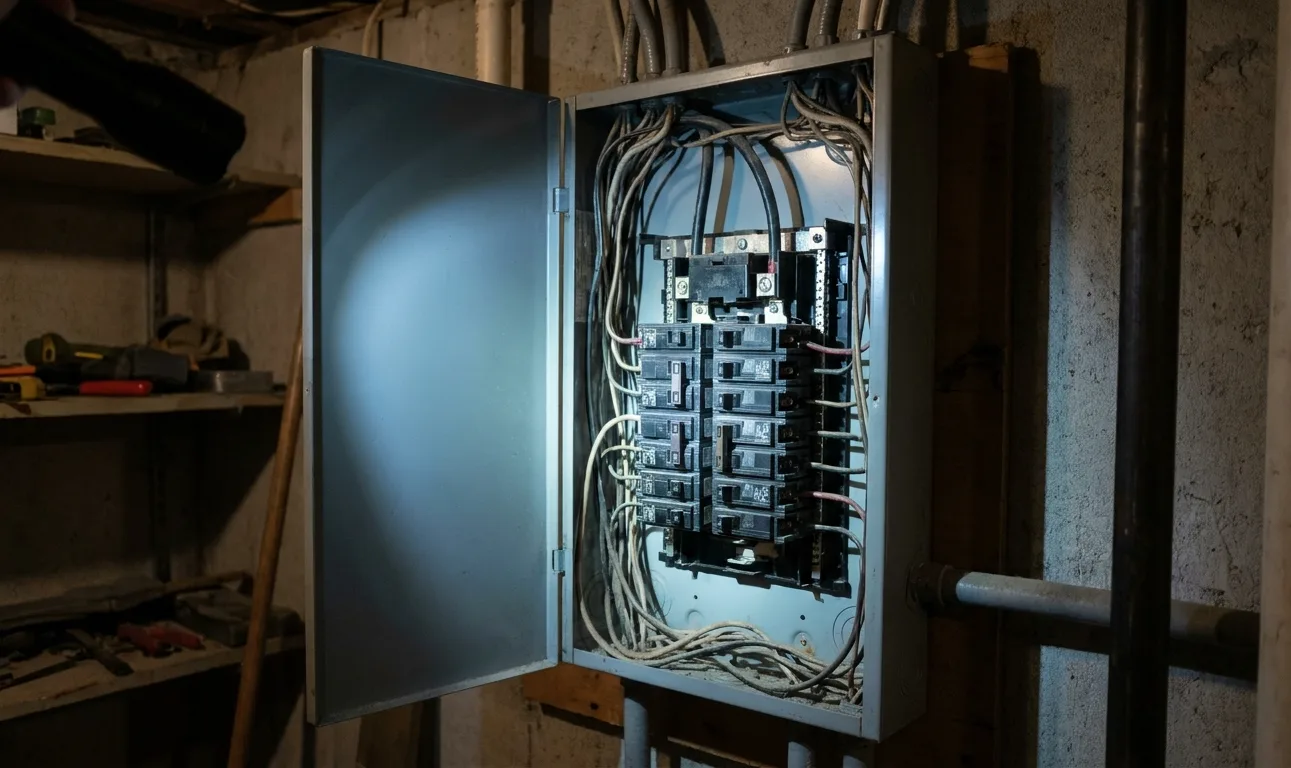
Warning Signs That Point to Breaker Trouble
- Breaker handle feels warm or shows scorch marks
- Trips return within minutes after reset attempt
- Burnt plastic smell near the service panel
- lights sag or flutter as big appliances kick on
- Visible corrosion or moisture inside the enclosure
Common Causes of Breaker Failure
Repeated overload from added loads on one circuit heats the bimetal strip inside the breaker until it deforms and loses calibration. Masters Electric technicians calculate actual amperage draw with a clamp meter and check it against the breaker rating printed on the handle. When the measured load exceeds eighty percent of the rating for long periods, the breaker must be replaced rather than reset.
Short circuits from damaged cords or loose terminations send high current through the magnetic trip coil. Our technicians isolate the line and load conductors, then perform a megger test between hot and neutral to locate the fault. They also check for backstab connections that have loosened over time and now arc under load.
Inspection Steps Our Technicians Follow
Technicians remove the deadfront only after confirming zero voltage at the main lugs with a non-contact tester. They then examine each breaker for hairline cracks, melted plastic around the terminals, and oxidation on the stab. Infrared scans reveal hot spots at the bus stabs that indicate poor contact pressure before a failure occurs.
Next they measure voltage at the load side of each breaker under normal conditions and again with the suspected circuit energized. Any reading below 110 volts on a 120-volt leg signals high resistance somewhere in the path. They also torque all neutral and ground bars to manufacturer specifications because loose neutrals can cause nuisance trips on shared circuits.
Repair and Replacement Choices
When only one breaker is faulty, Masters Electric installs an exact-match replacement of the same brand and amperage. For panels that already contain obsolete breakers no longer listed, the technician recommends a new panel interior or full upgrade rather than forcing mismatched parts. This keeps the equipment listable and avoids insurance issues later.
If the fault lies in the wiring rather than the breaker, they replace the damaged segment from outlet to panel or install a new homerun. AFCI or GFCI breakers are fitted where code now requires them on bedroom and kitchen circuits to provide additional protection the original device lacked.
Parts and Materials Installed
Replacement breakers are chosen made by the same company as the panel so it seats properly on the bus. Common types include single-pole 15- and 20-amp units, double-pole 30- to 50-amp units for appliances, and combination AFCI breakers that detect both series and parallel arcs. Masters Electric carries these in stock so one visit usually completes the repair.
Additional materials include new copper pigtails for aluminum terminations, anti-oxidant compound on older lugs, and fresh plastic bushings where cables enter the enclosure. All connections receive a calibrated torque driver to the inch-pound values listed on the panel label.
Circuit Breaker Repair questions
Is it safe to keep resetting a breaker that trips?
Reset once only after unplugging everything on that circuit. If it trips again, leave it off. Repeated resets overheat the contacts and can weld them closed, creating a fire hazard that requires immediate attention from Masters Electric technicians.
What causes a breaker to trip without an obvious overload?
Loose connections, insulation breakdown, or a failing breaker itself can cause trips. Technicians use insulation testers and thermal cameras to find hidden faults that a simple visual check misses.
What is the typical timeline for Circuit Breaker Repair?
Most single-breaker replacements finish in under an hour once power is isolated. Full panel inspections with multiple replacements can take two to three hours depending on access and the number of circuits that need testing.
Is it safe to touch breakers inside the panel?
Homeowners should never remove the deadfront or handle breakers while power is on. Even with the main off, stored energy in capacitors or backfed circuits can remain. Masters Electric technicians handle all internal work after verifying zero energy.
Schedule Circuit Breaker Repair
Contact Masters Electric when breakers trip or feel hot. Our technicians will test the panel and restore safe operation.