
EV Charger Installation in the USA
Our technicians begin every EV Charger Installation by verifying the main service rating and available breaker spaces. They measure continuous load on existing circuits with a clamp meter to confirm whether the panel can support a dedicated 40 or 50 amp feeder. When capacity is insufficient they explain the sequence of pulling permits and adding a subpanel before any charger wiring begins.
Homeowners should first locate the electrical panel and note its amperage rating printed on the main breaker. They must avoid running extension cords to any temporary charger because these cords overheat under sustained load. If the panel door shows signs of warmth or discoloration near the main lugs, power down nonessential loads and contact Masters Electric before proceeding with vehicle charging plans. Properties needing ev charger installation benefit from Masters Electric expertise available right on site.
Warning Signs Your Panel Requires EV Charger Installation
- Main breaker trips when multiple large appliances run together.
- Lights dim or flicker whenever the dryer or range cycles on.
- Panel interior shows discoloration around the bus bars.
- Existing 120 volt outlets feel warm after charging a vehicle.
- Service entrance cable is undersized for added continuous load.
Load Calculation and Circuit Planning
Technicians calculate the EV charger demand at 125 percent of its continuous rating per code tables. They add this figure to the existing dwelling load and compare the total against the service entrance conductor ampacity. If the total exceeds 80 percent of the main breaker rating they document the shortfall and list the exact conductor and conduit sizes needed for an upgrade.
They also trace the shortest practical path from the panel to the parking location. Voltage drop is measured at 3 percent maximum for a 240 volt circuit using 6 AWG copper on runs up to 50 feet. Longer runs require upsizing to 4 AWG or parallel conductors to keep the charger operating at full rated output.
Materials and Mounting Choices
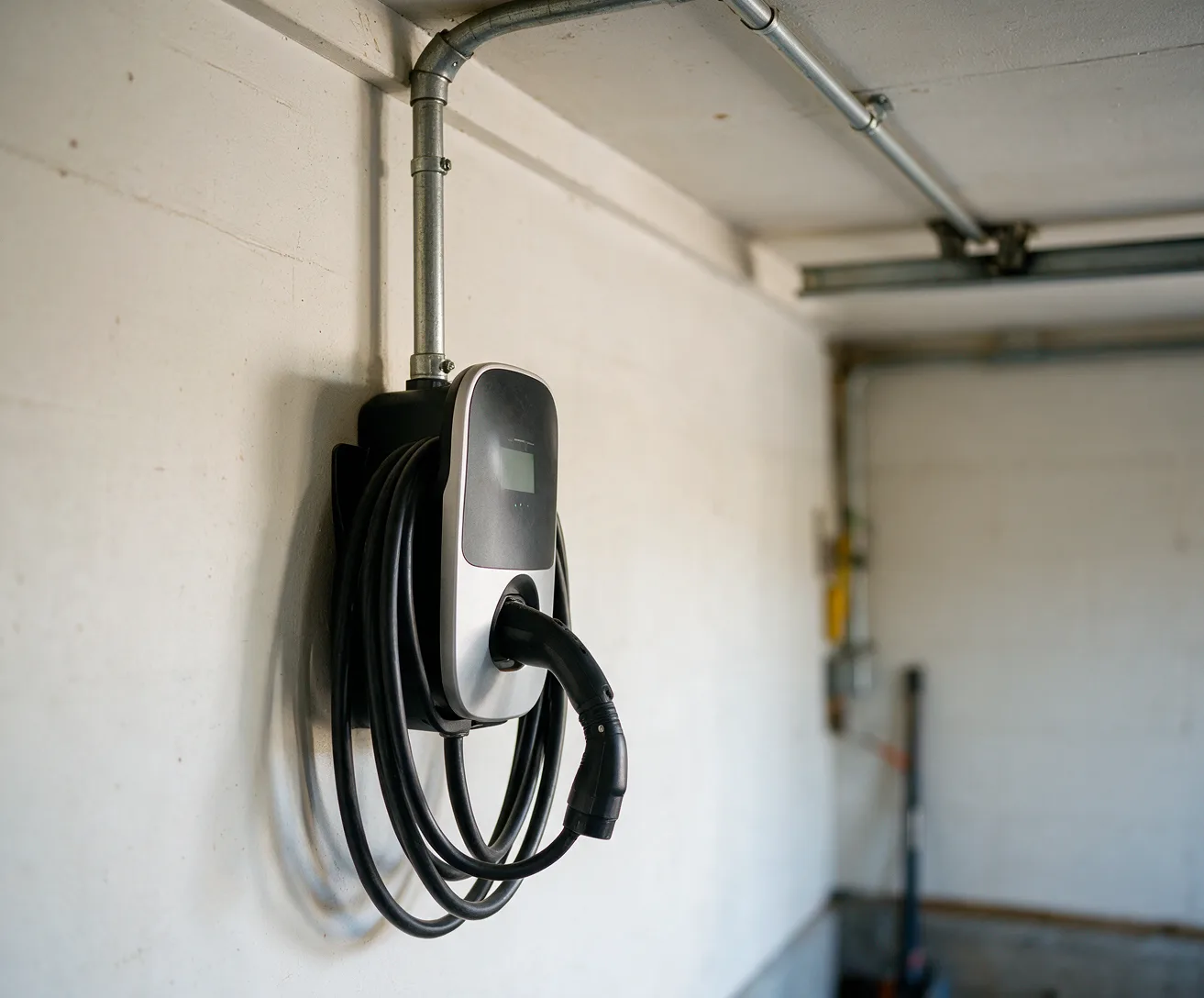
Masters Electric stocks hardwired level two chargers rated 30 to 60 amps along with NEMA 14-50 receptacles when a plug-in unit is preferred. Conduit is 3/4 inch EMT or PVC depending on exposure. Each installation includes a dedicated two-pole breaker matched to the charger amperage and a listed surge protective device installed at the panel.
Mounting brackets are secured to wall studs or a freestanding pedestal poured with concrete footings. Weatherproof enclosures protect the unit when installed outdoors. Technicians torque all terminations to manufacturer specifications and apply antioxidant compound on aluminum terminations before closing the panel.
What Homeowners Should Do Before Arrival
Clear a three-foot workspace around the electrical panel and mark the intended charger location with tape. Note the make and model of the electric vehicle so cable length and plug type can be confirmed. Photograph the panel label showing main breaker size and any existing subpanel ratings.
Do not attempt to run temporary wiring or open the panel yourself. If an outlet already used for charging feels hot to the touch, unplug the vehicle and switch off that breaker until our technicians arrive. Provide the vehicle charging schedule so the new circuit can be sized for typical overnight use.
Final Testing and Handover
After wiring is complete technicians energize the circuit and verify voltage at the charger under full load with a true RMS meter. They check for ground faults with the built-in test function and confirm the GFCI trips and resets correctly. A printed label is affixed inside the panel door listing the new circuit location and amperage.
Homeowners receive the charger manual and a one-page summary of the measured loads and conductor sizes. Any future expansion notes, such as remaining breaker spaces, are recorded so additional circuits can be added without repeating the full load calculation.
EV Charger Installation questions
How long does an EV Charger Installation take?
Most straightforward EV Charger Installation jobs are completed in four to six hours once the dedicated circuit is planned. If a panel upgrade or new conduit run is required the work extends to one additional day while materials are staged and inspections scheduled.
Can I install the charger myself?
No. EV Charger Installation involves continuous loads that must be calculated against the entire dwelling service. Only qualified technicians can verify conductor sizing, torque terminations, and coordinate required inspections before the circuit is energized.
What size circuit does my charger need?
A typical level two charger draws 30 to 50 amps continuously. Our technicians measure the panel capacity and run the appropriate feeder, usually 6 AWG copper in 3/4 inch conduit, protected by a matching two-pole breaker.
Do I need a new panel for an EV charger?
Only when the existing service cannot accept the added continuous load. Technicians calculate the dwelling demand first. If the total exceeds 80 percent of the main rating they outline the exact steps for adding a subpanel or upgrading the service entrance.
Arrange EV Charger Installation
Contact Masters Electric to schedule an on-site assessment of your panel capacity and parking location for a dedicated EV charger circuit.